Chapter 02
Chronology of Bill Ainslie
Bill Ainslie descended from a Scots family, who came to the Cape in 1834 to join relatives who had arrived in 1820 with a party of British settlers to occupy land near the Eastern Cape frontier. [5] This land had been occupied from at least the sixteenth century by amaXhosa people, who by then had been driven further inland by colonial forces.
In other words, the 1820 and the later settlers were there to strengthen a colonial frontier. They were thus drawn into the conflict over land that had persisted since the late eighteenth century between the Dutch and British colonists on the one hand, and the groups of amaXhosa people on the other.
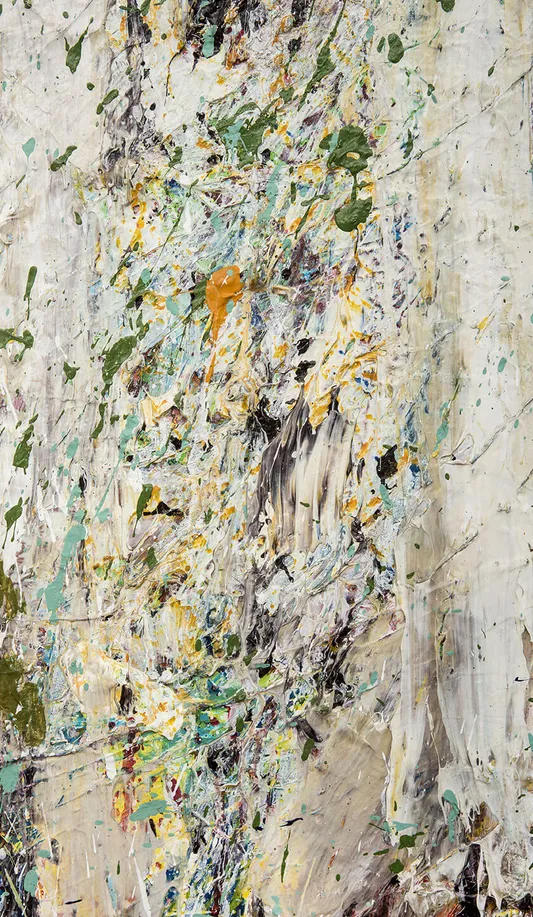
Birth of Bill Ainslie
William Stewart (Bill) Ainslie is born in the town of Bedford, Eastern Cape, on 10 April 1934. This is 100 years after his family arrived from Scotland in Africa. The lush and fertile farm, ‘Spring Grove’, remains to this day in the hands of the Ainslie family. His parents, Ross and Kathleen, have an older daughter, Jean, and later, another daughter, Pam.
Driven to the city
Since he is not the eldest son, Ross Ainslie does not inherit the family farm. He becomes a merino sheep farmer in the distant district of Carnarvon, Northern Cape, in the arid Karoo. But by 1938, the worldwide Depression and an extended local drought have driven the family off the land. Bill’s father finds employment as a ‘compound manager’ on gold mines in the Witwatersrand. The family settles in industrial Germiston, near Johannesburg. By the age of four, Bill Ainslie has experienced the open landscapes of the semi-desert, the lush forests close to Bedford, and the clamour of the mines and their factories.
Death of his father
Despite his age (37), Bill’s father joins the South African Air Force as an air mechanic and flies with his bomber squadron to Madagascar. Like many of his fellows, he is infected by malaria, but, as a Christian Scientist, he refuses hospitalisation and dies of cerebral malaria. He is buried in Madagascar. Bill Ainslie is eight years old.
Leadership at school
Like his sisters, Bill Ainslie is sent to boarding school. In his case, it is to a Johannesburg school for White boys, King Edward VII Preparatory School (KEPS) and then King Edward VII Secondary School (KES), where, after ten years there, he matriculates in 1952. He captains the school rugby and cricket teams and is both cadet captain and head prefect. His leadership qualities are obvious. Pupils are prepared by this school to offer ‘manly public service’ to the British Empire and to play leading roles in a racially segregated society dominated by Whites.
University and influential people
After his indecision about a future in either agriculture, teaching or preaching, Ainslie enrols at university in Pietermaritzburg for a general arts degree, majoring eventually in fine art and philosophy. His professor, Jack Heath, urges him to focus on art and he graduates in 1958 with an Honours degree in Fine Art. His dissertation is on the work of Picasso.
While at university, Ainslie acts as president of the Students’ Representative Council and is editor of the student newspaper, NUX. Under the influence of his lecturers, friends and girlfriend Cathy Shallis, Ainslie’s views on economic, cultural and political matters shift from the conventional views and opinions of White society to an inclusive concern with non-racial justice for all.
Consequently, he becomes open to the wisdom of Chief Albert Luthuli; the concerns of writer Alan Paton; the religious perspective of the Reverend Calvin Cook; and the ideas of many other public figures active in that part of the country. Ainslie joins the small Liberal Party of South Africa, which advocates equal voting rights for all in a non-racial country. In 1956, Ainslie is introduced to the artist, teacher and thinker Selby Mvusi, which marks a major turning point in Ainslie’s career.
As Ainslie later recalls: ‘It was my first contact with a black artist and my first liberal education as a white South African. Selby alerted me to the needs of the country. He was the first person to teach me about the situation here, and through him I began to see the demand for the development of black art. The work I have done in my life was a consequence of the formative period I spent with him.’ [6]
Michaelhouse, marriage and Cyrene Mission
After graduating, Ainslie takes an art-teaching post for two years at Michaelhouse, a private boys’ school in Balgowan, Natal. While there, he marries Fieke Jansen-Schottel, of Dutch descent, in 1960. They then go directly to live, paint and teach art at Cyrene Mission in the Matobo Hills outside Bulawayo in then Rhodesia. His students are young Black men, whom he encourages, with some success, to break from the mission stereotypes and paint more freely.
Ainslie continues his own work there and, in 1961, contributes a column on the arts for the local newspaper, the Bulawayo Chronicle. When he supports the students’ token strike in sympathy with national workers, he is obliged to leave the mission. He and his pregnant wife return to South Africa and intense city life.
Temporary sojourn in Bulawayo
Required to leave Cyrene Mission, Ainslie gets a temporary teaching job at a state school in Bulawayo, paints and has a work accepted by the Artists of Fame and Promise exhibition held in the Adler-Fielding Gallery in downtown Johannesburg.
Apartment in Hillbrow and first solo show
The arrival of Bill and Fieke Ainslie in Johannesburg is deliberate and decisive. They rent a seventh-floor flat in Esselen Street, Hillbrow – the densely populated and most liberated living space in the city – and weave a network of past acquaintances together, including cultural activists, township intellectuals, school and university friends and members of the diplomatic corps. Their son, Sholto, is born in June 1963.
Ainslie holds his first solo exhibition at the Adler-Fielding Gallery in 1964. It consists of paintings of large and powerful Black figures in conventional situations: childcare, domestic chores, people waiting, children playing … all suggesting shared emotional concerns. The show is a success, mainly because the quality of the painting and the focus on people as subjects thus breaking with the conventional depictions of Black figures as exotic, sentimental objects.
Encounters with Feni and Portway
Moving from Hillbrow to Parktown, the family rents one half of a large, ex-mining-magnate’s mansion in Jubilee Road. They have space in which to live, have a studio and teaching room, and accommodation for visitors. For example, the artist Dumile Feni stays there for two years, bringing with him gusts of township energies and risks. The house is a hive of activity, filled with artists, friends and students – but is also carefully watched by the police.
A combined tone and ethos are created, which characterise all the venues in which Ainslie lived, taught and worked. It is noteworthy that neither Bill nor Fieke Ainslie ever owned property.
Most momentous at this time for Ainslie’s development as an artist is his response in 1965 to the paintings exhibited by the established South African artist Douglas Portway in Pretoria and Johannesburg. Ainslie opens up to the possibilities suggested by the Portway works because he is thinking and feeling beyond the limitations of his depiction of Black figures. Like Ainslie, Portway struggled with the difficult issue of being a politically aware White artist in a racially unjust society. Portway’s answer was to leave South Africa. Ainslie, however, chooses to remain.
Ainslie publishes a letter to four Black artists, saying that, whereas White artists are ‘against the visionary faculty’, Black artists tend to show figures ‘on the outside’. Neither seems willing to plunge into what the English poet Matthew Arnold called ‘the central fiery heart of things’. Remarkably, this letter treats all artists as colleagues, regardless of external features. David Koloane described this act as ‘fearless’ for its time.
Second successful solo show in Johannesburg
After the success of the 1964 show, the Adler-Fielding Gallery gives Ainslie a retainer, freeing him from a teaching job in a regular school. In return, he gives the gallery a full exhibition in 1966, one similar to his previous show. However, his doubts about his current approach to painting intensify.
Ainslie and his friends discover the novels of the Australian author Patrick White. His Riders in the Chariot (1961) provokes discussions and paintings, such as those by Caroline Seawright, then working at the Ainslie Studio. White’s later novel, The Vivisector (1970), about a painter, is read with intense interest by Ainslie. Bill and Fieke’s daughter, Sophia, is born.
Show in Durban: ‘Vigil’
Ainslie accepts an invitation by the Durban Art Gallery to exhibit there. In a rare speech about himself and his work, he makes clear his increasing conviction that South African artists need to free themselves from conventional restraints and expectations and strike out to paint with an African consciousness. This show’s works have overt African references, and the dominant theme is a political one. The title, ‘Vigil’, suggests the country’s expectant waiting for something momentous to happen.
Sheds figurative work, shows with Goodman Gallery
By now, Ainslie is disentangling his work from the constraints of the figurative. At his next exhibition, at the Goodman Gallery in Hyde Park, he experiments with large, colour-field canvases. He says, ‘I have become fascinated by the possibilities of combining multiple memories derived from memory and working them together to create a mood.’ They receive a tepid response.
At the Art South Africa Today competition, Ainslie receives the Hajee Suliman Ebrahim Award. With the enforced closure of the Liberal Party, Ainslie has no political home. His political alignment thereafter is not organisation-specific but is in general support of the liberation movement.
England, the Netherlands, Portway and Fieke’s family
These years are spent abroad. He meets his wife’s family, after eight years of marriage. The couple and their two children then settle in St Ives, Cornwall, where many mature and successful British artists, as well as Douglas Portway, are based. From the Ainslie flat, one can see the roof of Portway’s home.
Ainslie’s work is well received in St Ives and two of his paintings are included in the 1969 Penwith Society Spring Exhibition, along with works by Portway, Paul Fuller, Peter Lanyon, Patrick Heron and others. The works of a number these artists are today represented at the Tate Britain. Despite the positive regard for his work by these British artists, his current work is rejected by that year’s Art South Africa Today and the Transvaal Academy of Arts shows. He next exhibits at the De Sfinx Gallery in Amsterdam (1970) and is very well received for the poetic quality of the work.
Returns to South Africa, holds ‘Wilderness’ show
Despite the possibility of extending their stay in Britain and especially the Netherlands, Bill and Fieke Ainslie decide to return to South Africa. They are accommodated first by Ton and Jana Hermans outside Pretoria, where Ainslie prepares further work for his two forthcoming exhibitions.
Cecily Sash, lecturer in Fine Arts at the University of the Witwatersrand (Wits), rents them her home in York Road, Ferndale, and Ainslie assembles a small group of students. This arrangement lasts until 1973. Ainslie’s 1972 solo exhibition, ‘Wilderness’ at the Goodman Gallery, consists of large abstracts, portraits and a series of collages on paper titled Homage to Bonnard’s Dachshund. This show represents Ainslie’s finding a ‘voice’ that is distinct from Portway and other influences.
Inhabits Killarney mansion, joined by Koloane
Ainslie discovers a large, deserted property at the top of Anerley Road in the Johannesburg suburb of Killarney. It had been the Yugoslav Embassy until the diplomats were expelled from South Africa for helping political prisoners to escape from jail in 1964. He gets access to this 21-room building for R40 per month. It adjoins the properties of Harry Oppenheimer of Anglo-American, known as ‘Little Brenthurst’, and the home of Clive and Irene Menell of AngloVaal, ‘Le Tholonet’. Across the street is the home of Dougie Hoffe, who chairs De Beers Consolidated Mines, and his wife Jackie. In other words, he is surrounded by gold and diamond magnates.
The ex-embassy building has been vandalised and the garden is a huge wilderness. The outbuildings are occupied by people of dubious interests. Children report ghosts. Friends and helpers make the place habitable and usable, and there Ainslie conceives the idea of having larger classes of students and a team of teachers, thus enabling him to engage the broader community with creative work in the plastic arts.
This year, he holds an exhibition at the South African Association of Arts’ Northern Transvaal Gallery in Pretoria with the focus on large abstract paintings devoted to the theme, ‘Namib’. A Christmas party, held by the Ainslies and their friends Michael and Lettie Gardiner, takes place at the ex-embassy in Killarney. Two interesting guests are Dr Chabani Manganyi, the first Black South African psychologist and author of Being- Black-in-the-World (1973), and poet and artist Wopko Jensma, whose 1973 publication Sing for Our Execution causes a stir, partly because some readers and reviewers cannot decide whether his woodcut prints and his poetry are by a White or a Black person.
Of particular note is that, in 1974, David Koloane joins the group of students at the Killarney Studio. He arrives as a beginner painter on the advice of artist Louis Maqhubela and becomes a fully fledged, successful artist. He remains a central member of Ainslie’s working life and memory until the dissolution of the JAF in 2001.
Occupies Oxford Road premises, meets Greenberg
After two years, Ainslie is compelled to move his entire project to new premises as the Killarney property has been sold. He rents a big house nearby at 61 Oxford Road and the living, working and teaching quarters are made as useful and attractive as possible, with the addition of space for showing films with a noisy projector.
This year, South Africa has a visit from US art critic Clement Greenberg. As adjudicator for Art South Africa Today, he awards Ainslie the Cambridge Shirt. Another visitor to the country is the Paris-based Afrikaner poet Breyten Breytenbach, who is arrested and jailed for nine years for his plan to overthrow the government.
This is also the period when the state, having recklessly imposed Afrikaans as an obligatory language of learning upon Black school children, provokes a massive and bloody uprising by the young in June 1976, a national event that changes the country’s political landscape irrevocably.
Discovers new premises in Saxonwold
After a further two years of activity, the Ainslie entourage has to leave the premises, this time because neighbours object to multiracial goings-on. Walking with his son one Sunday morning, Ainslie comes upon an empty mansion on a double stand at 6 Eastwold Way in the Johannesburg suburb of Saxonwold. The property had been acquired by the city council and its contents, an Africana collection of a retired mining engineer, had been bought by Wits University. Plans were to establish an off-campus research centre there, with accommodation for the university librarian, but the deal has fallen through and the place has been abandoned. Ainslie manages to rent the property, which has stood empty for years. Despite problems such as rising damp, he moves his project into an ideal set of spaces, rooms, basements and studios for multiple activities in the visual arts.
Campaign to acquire a permanent location, presents workshops paper in Cape Town
When, two years later, the city council makes unreasonable demands for higher rent and repairs to the Saxonwold building by Ainslie, a group of well-wishers intervenes to acquire the property so that Ainslie and the centre have security of tenure. When the property is put to tender by the city council, a trust is constituted and a tender for purchase submitted. A campaign in support of the newly formed Johannesburg Art Foundation’s (JAF) tender is launched across a wide spectrum of arts and city interests, with the aid of the English- and Afrikaans-language media. The council is persuaded to grant the JAF its tender of R150 000, payable over ten years.
During this period, there are two events of note. The first is the contribution that Ainslie and Koloane contribute to the formation of the Federated Union of Black Artists (FUBA) in Newtown. The other is the paper that Ainslie delivers a paper in 1979 at the University of Cape Town on his use of workshops to teach art, titled ‘An Artists’ Workshop – Flash in the Pan or a Brick that the Builders Rejected?’
The Johannesburg Art Foundation established
In 1982, the property becomes owned by the JAF trustees, with Ainslie as director, Fieke as administrator and with teaching and other staff.
Despite continuous violence and disruption in the country, the 1980s are a period of intense focus on creativity and its primacy among those drawn to the plastic and other arts. The premises of the JAF are in full use.
Visitors include arts patron Robert Loder; sculptors Sir Anthony Caro and Isaac Witkin; critics and curators Terence Maloon and Gene Baro; jazz educators Darius and Catherine Brubeck; actor-director Dame Janet Suzman; writers Nadine Gordimer, Lionel Abrahams and Athol Fugard (with novelist Sheila Fugard); theatre director Barney Simon; and financier and philanthropist George Soros.
Then there are poetry readings, writers’ meetings, children’s classes, visiting lecturers and musical performances, as well as full- and part-time classes offered by an expanded teaching staff.
As director, Ainslie, along with his council (elected and augmented annually) must deal with financial management, fundraising, maintenance of the property and paying rates and taxes. There are also school-holiday workshops, evening seminars and lunch-time talks and performances.
Attends the Culture and Resistance Symposium in Gaborone
The African National Congress (ANC) in exile spearheads the Culture and Resistance Symposium in Gaborone, Botswana. It is a joyful coming together of people involved in cultural activities outside (exiles) and inside (inziles) the country, who are able to meet, talk, dance and plan together after years of separation. Led by Koloane, the group of Ainslie, Dikobe Ben Martins, Colin Smuts and Paul Weinberg plus figures from Durban and Cape Town put together an exhibition of paintings and photographs.
The intention by the ANC to enlist ‘cultural workers’ in the liberation struggle is undercut by the absence of ANC policy or adequate preparation. (The ANC establishes a Department of Arts and Culture only in 1983). While the ANC goes back to the drawing board, those artists and teachers inside the country display a heightened sense of need for cultural organisations to connect with their circumambient communities. Ainslie and the JAF are far ahead on this score.
The ANC’s follow-up is the Culture in Another South Africa (CASA) conference in Amsterdam in 1987, which produces a rigid framework for the control by ANC cadres of cultural activity. Ainslie and others try to act on the request from Mongane Wally Serote to establish a number of arts centres in South Africa, like the JAF. This leads Ainslie and other JAF figures to work with local residents to establish the Alexandra Arts Centre in 1986.
Koloane attends the Triangle workshop in the US
After meeting the British abstract sculptor Anthony Caro in Johannesburg in the early 1980s, Koloane is invited to attend the Triangle Artists’ Workshop, held on a farm in Pine Plains, Dutchess County, about two hours north of New York City. This is an international residency programme founded by Caro and arts patron Robert Loder to bring together mid-career painters and sculptors from the UK, Canada and the US for intensive, collaborative work.
When Koloane meets up with Ainslie in New York, they discuss the possibility of setting up a similar artists’ workshop in South Africa.
They meet with Peter Bradley, an American artist of note and clear opinions, who agrees to be the guest artist at the first such workshop – to be named Thupelo, meaning ‘let us learn together’ – in 1985. The plan is given ANC support.
Ainslie prepares a set of abstract paintings to be exhibited at the Goodman Gallery the following year. It should be noted that Ainslie has not held a solo exhibition of his work since 1973.
Solo show at the Goodman
Ainslie holds a solo show of abstract paintings and portraits at the Goodman Gallery. It receives mixed responses. A number of large abstracts are acquired by art museums and individuals but the generally cool response provokes questions about the readiness of local buyers to appreciate the value and quality of genuine abstract paintings.
First Thupelo workshop, led by Peter Bradley
Using their experience of the Triangle Artists’ Workshops in upstate New York in 1983 and 1984, Koloane and Ainslie organise a local workshop for artists, who work under difficult conditions. Fifteen artists come together for two weeks and are provided with board, lodging and unlimited materials. Funding comes from USSALEP (the United States-South Africa Leader Exchange Programme), a Quaker-based enterprise. The first Thupelo workshop takes place in August 1985. The visiting artist is the New York-based painter and sculptor, Peter Bradley.
These workshops continue at different venues annually, but provoke some academics, gallery owners and critics to attack both the workshops and the JAF – and, by extension, Ainslie himself. Supported by the English businessman and art collector Robert Loder, the Triangle-Thupelo model thereafter spreads throughout Africa. These workshops are now an international phenomenon.
Second solo show of abstracts at the Goodman; Alexandra Arts Centre established
Ainslie holds his second solo show of abstract paintings at the Goodman Gallery. Though there is subdued interest in this work, it receives an effusive and lengthy review by Samantha James, published in The Star on 10 July 1986. She writes:
Both the very physical fact of paint and the ambiguous illusion of seeing through it into worlds of ‘otherness’ are apparent in the best works. They are at once material yet seem to have been transformed so that they have the capacity to open the heart and restore the beholder to himself.
Ainslie participates in group shows at the Gertrude Posel Gallery at Wits University and in the Thupelo travelling show.
Working with JAF staff, township community leaders and others, Ainslie sets about establishing the Alexandra Arts Centre with Bongi Dhlomo, artist and participant in the JAF, as director.
Contributes to group shows
Ainslie contributes to group shows at the JAF, the Natal Society of Arts Gallery in Durban, the University of South Africa in Pretoria and the Vita Award show at the Johannesburg Art Gallery. He continues to paint portraits.
Attends Pachipamwe I, outside Harare
Ainslie opens an exhibition of steel sculpture by Anthousa Sotiriades and describes his thinking about current factors in African art. He asserts that African Modernism and the New Abstractionists have achieved freedom from theory. Since art is now free from history and no longer censored by tradition, he argues, there is a ‘fresh and independent’ spirit in African art that could revitalise tired Western art.
Ainslie and Koloane are invited by Robert Loder to contribute to the first Pachipamwe artists’ workshop, to be held outside Harare in Zimbabwe.
Attends Pachipamwe II. Dies in motor accident
Loder asks Ainslie and Koloane to attend and assist at a second Pachipamwe artists’ workshop. This time it is held outside Bulawayo, Zimbabwe, on the site of the Cyrene Mission where the newly married Bill and Fieke Ainslie had lived and worked in 1960–1961. Ainslie takes unusual care to bid farewell to family and friends before leaving for two weeks.
At the workshop, he uses the time for almost frenzied painting, day and night. He produces six acrylic paintings on canvas and ten works of acrylic on paper. They have astonishing intensity and lucidity in their painterly abstraction and exemplify a surge of sureness and delight.
Driving back to Johannesburg with their work inside the car, Ainslie has the company of Helen Sebidi and David Koloane. On the highway in the Northern Transvaal (now Limpopo), the car collides head on with a truck. Ainslie is killed and the two passengers are hurt. The paintings survive.
Posthumous exhibition of Ainslie’s last paintings
Six acrylic on canvas and ten acrylic on paper paintings made by Ainslie at Pachipamwe are exhibited at Wolfson College, Oxford University. Steven Sack, curator of the groundbreaking exhibition and catalogue for the Johannesburg Art Gallery, The Neglected Tradition (1988), is appointed Director of the Johannesburg Art Foundation.
Pachipamwe II paintings shown in Johannesburg
These final works are shown at the Johannesburg Art Gallery, where the exhibition is officially opened by David Koloane.
Dissolution of the JAF
Twelve years after Ainslie’s death, the Johannesburg Art Foundation closes. Several directors have tried in the intervening years to continue its work in different forms, but it becomes unsustainable and shuts.
On 12 April 2003, Fieke Ainslie [as Sophia Jacomina Elisabeth Ainslie-Jansen] is awarded a knighthood by the Netherlands government. She becomes a ‘Ridder in de Orde van Oranje-Nassau’ (Knight of the Order of Orange-Nassau) for her services as a Dutch citizen to art in South Africa. [7]
Notes
-
5
William Ainslie (1790-1855) married Jessie, sister to the poet Thomas Pringle (1789-1834), who had arrived as a Settler in 1820. ↩
-
6
Pat Williams, Last Paintings by Bill Ainslie, 1934–1989 (Oxford: Wolfson College, 1990), posthumous exhibition catalogue, p. 5. Numbers of young White South Africans, brought up in rigorously racist environments, found that even a single experience of meeting a confident and articulate Black person for the first time meant that their inherited racial stereotypes were shattered irrevocably. ↩
-
7
In response to news of this award, Nadine Gordimer wrote, ‘Your contribution to the nurturing and support of young artists, in the extraordinary partnership of devotion to the arts and human development you had with your man, Bill Ainslie, is unmatched by any couple I know.’ Letter to Fieke Ainslie, 18 April 2003. ↩